
Bharti Airtel Chairman Sunil Bharti Mittal said India has lost one of the finest political leaders and a legal luminary.

The Indian economy needs to generate an average of nearly 78.5 lakh jobs annually until 2030 in the non-farm sector to cater to the rising workforce, according to the Economic Survey for 2023-24. The Survey tabled in Parliament on Monday also laid emphasis on the private sector's role to create employment in the country saying "In more than one respect, the action lies with the private sector. "In terms of financial performance, the corporate sector has never had it so good."

Barclays, the global brokerage firm, also stated that the election verdict could lead to a weakness in the stock market.

As the UN marks 75 years of its existence, the 193-member UN General Assembly adopted a forward-looking political declaration that gave a clarion call for strengthening mechanism to combat terrorism, reformed multilateralism, inclusive development and better preparedness to deal with challenges like the COVID-19 pandemic.

There are several welcome standalone reforms, but these do not add up to a coherent strategy to achieve a $5 trillion economy or secure Aatmanirbharta, observes Rathin Roy.
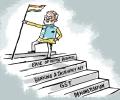
Three-quarters into the 10 years that Mr Modi had sought for transforming India, the 'output' numbers look impressive, but the key 'outcome' numbers don't show up much, if at all, observes T N Ninan.

China is trying to legitimise its claim over Tibet through museums, and cultural institutions in the region, according to Tibet Rights Collective.

'India represents one of the top opportunities with robust growth, solid fundamentals, and openness to foreign investment.'
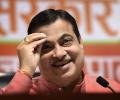
Senior Bharatiya Janata Party leader and Union minister Nitin Gadkari on Monday asserted that votes are won on the basis of "politics of service" rather than on "posters and banners".

Leading economic think-tank NCAER has advocated slew of policy reforms, including a felxible labour regime, to boost exports from the country.

There is nothing to be worried about as bilateral ties are robust with solid foundations. Both are on the same page on the economic and defence/security ties bilaterally and globally and that shall continue irrespective of change in political dispensation in either country, points out Dr Rajaram Panda.

Principal economic advisor, Ila Patnaik, is coordinating the work on Economic Survey 2013-14.

IMF, which has also lowered its global economic growth forecast for 2016 and 2017 by a marginal 0.1 per cent to 3.1 and 3.4 per cent respectively, recommended six 'reform priorities' for India
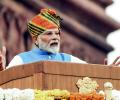
'The non-biological PM's capacity for malice, mischief, and maligning of history knows no bounds. It was on full display today from the Red Fort'
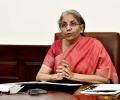
Union Minister Nirmala Sitharaman on Thursday said speaking Hindi gives her 'shivers' and she speaks the language with hesitation.
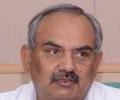
The new economic affairs secretary believes that doing more of the same cannot help; you must do things differently.

PM Modi went to New York this time not to engage in polemics, but to find solutions to global problems. He made some progress on several matters, even on reform of the UN Security Council, when the US made a major concession for the first time that six permanent members without veto, including India, could be considered
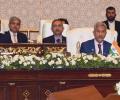
Delivering a thinly veiled message to Pakistan from its soil, External Affairs Minister S Jaishankar on Wednesday said activities across borders characterised by the 'three evils' of terrorism, extremism and separatism are unlikely to encourage trade, energy flows and connectivity.

The slowdown in India is related to a credit squeeze, which is a cyclical problem - not a structural problem: American economist Steve Hanke.

'For experienced and risk-taking investors, now may be the time to go all in.' 'By 'experienced and risk-taking', I refer to those who remained net buyers in equities during the early stages of the 2020 pandemic.' 'On the other hand, those who exited the markets during the pandemic may go the SIP way.'
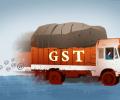
Goods and Services Tax collections jumped 10.4 per cent to over Rs 1.72 lakh crore in January, reflecting buoyant economic activity and setting the stage for the next phase of GST reforms. This is the second-highest monthly collection ever and marks the third month in this financial year with a collection of Rs 1.70 lakh crore or more, a finance ministry statement said on Wednesday.
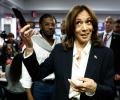
'This victory would mean a huge inspiration for the next generation who can say that coming from India I can be anybody I want to be if I work hard and acquire the right skills.' 'They could be the next President, members of the Senate, or another Sundar Pichai.'

Cohn served as Trump's chief economic advisor since the beginning of the Administration. During his stay at the White House, he led coordination of Trump's pro-growth domestic and global economic policy agenda, including the passage of historic tax cuts and reforms in December 2017, the official said.

If we persist in talk and little action, I think we will slip. I fear the consequences of sustained slow growth. We need strong, sustained, clever action today, Rajan said.

This is the full text of the address to the nation by President Droupadi Murmu on the eve of India's 78th Independence Day.

Uptick in growth projected in second half of current fiscal based on 10 factors including higher FDI flows, build up of demand pressure, positive GST revenue growth
Vijay Kelkar, who headed the committee on tax reforms, on Tuesday warned that higher economic growth and foreign direct investment flow could not be achieved without hard fiscal reforms.

If growth reverts to the pre-Covid level, a lot of people may have to temper their rosy optimism, points out Debashis Basu.
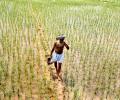
This is another blow to Modi's ambitious economic reform agenda that has been stalled by a logjam in parliament

"Now is the time for countries with room in their budgets to deploy -- or get ready to deploy -- fiscal firepower. In fact, low interest rates may give some policymakers additional money to spend," new IMF chief Kristalina Georgieva said.
Economic reforms have remained an article of faith for all the governments at the Centre in the last 18 years, irrespective of the political parties that formed them.
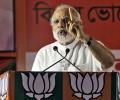
While many promises remain unrealised, power reforms and the creation of tens of millions of new bank accounts have helped Modi maintain his popularity
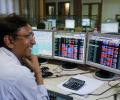
From the Sensex pack, Adani Ports & Special Economic Zones, Mahindra & Mahindra, Reliance Industries, HDFC Bank, Larsen & Toubro, NTPC, State Bank of India, UltraTech Cement and Kotak Mahindra Bank were the major gainers. In contrast, Tata Steel, Titan, Bajaj Finserv, JSW Steel, Bajaj Finance, Hindustan Unilever, ITC, Tata Motors and Tata Consultancy Services were among the laggards.

China's economy is in transition, with rising wage costs and massive overcapacity.
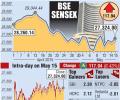
The 30-share Sensex gained 118 points to end at 27,394.

'Some of the astounding proposals, if translated into statutory provisions, would be suicidal.' 'This would not be a wonder cure for increasing insurance penetration and only result in mushrooming growth of players like paan kiosks with deleterious consequences.'
'We are worried for the workers because in the private sector, jobs are not secure, there is no decent work condition and there is no social security.' 'That's why we are opposing the economic policies of this government.'

'I am shocked that the BJP makes so many commitments. What did they deliver as the NDA?'

Among the national parties, the Congress, Aam Aadmi Party, the Bahujan Samaj Party and the Communist Party of India-Marxist opposed the proposal, while the Bharatiya Janata Party and the National People's Party supported it.

Of the seven surveys presented under Modi govt, predictions of three were quite close to the actual GDP growth rate, one saw the base year change in between, but the last three were way off the mark.
